Case Study
Account Expansion
Ecosystem Building
Lead Generation

How Two HR Companies Increased Integration Adoption by 35% with ELG and a Customer-First Mindset

  • Closing product gaps through integrated partner solutions
  • Warm introductions to accelerate stalled deals
  • Better-targeted insights to increase win rates on deals where the integration was a key selling point
  • Identifying inactive integrations as early churn signals
  • Launching joint upsell and renewal plays
  • Using ecosystem intelligence to identify which customers benefit most from campaigns

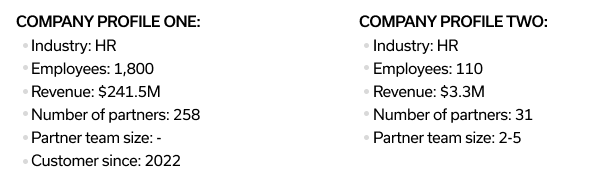
’s Ecosystem Profile
Company Size
Partnership Team Size
Partners
Customer Since
00
35%
35%
increase in integration adoption
00
15%
15%
increase in win rates
00
25%
25%
reduction in administrative errors
’s Ecosystem Profile
Company Size
Partnership Team Size
Partners
Customer Since
Ready to have your own success story?
Share This
Twitter IconLinkedin IconMail

A workforce management platform set out to simplify and optimize HR and workforce operations while delivering more value to its customers. 

Its former Head of Growth, now Chief Commercial Officer, knew that achieving this meant closing product gaps. So they built an integrated product strategy. 

During the rollout, he connected with the former Head of Benelux, now Director of International, at one of Europe's leading HR systems for SMEs and scaling businesses.

After launching their technical integration and activating it with Ecosystem-Led Growth (ELG), the teams saw clear results: 

  • 35% increase in integration adoption within the first six months.
  • 20% reduction in payroll processing times due to automatic syncing of employee hours and time-off data.
  • 25% reduction in administrative errors related to HR and scheduling tasks, particularly in areas like leave management and overtime calculations.
  • 15% increase in win rates for deals where the integration was a key selling point, driven by better-targeted insights from Crossbeam.

Below is how both GTM teams paired a tech integration with ELG plays to deliver measurable customer value. 

Rolling out a successful partnership 

Most partnerships start by proving value through numbers—potential revenue, shared opportunities, customer overlap. But these teams also need to prioritize shared vision, cultural fit, and customer needs. 

Both companies recognized that their customers needed a unified solution to streamline their operations. 

“We excel in workforce scheduling and time tracking, while our partner is a leader in HR and payroll management. The collaboration was a natural fit since combining our platforms allowed us to address complementary aspects of operational efficiency,” said the Chief Commercial Officer. “We recognized that together, we could deliver even more value to our customers by integrating our solutions and creating a cohesive ecosystem that tackles HR, scheduling, and payroll challenges with ease.” 

The Director of International echoed this sentiment: “For us, even if we’re an all-in-one HR platform, we have to bridge some of our functionality, so, without adding a working scheduling and time tracking functionality, we’re not a complete platform.”

To ensure the integration delivered real value, the teams followed a structured approach: 

  1. Identify product gaps: The Chief Commercial Officer manually found and connected with a partner (Europe's leading HR systems for SMEs and scaling businesses), whose capabilities aligned with customer needs. 
  2. Align both organizations: They ensured alignment across mission, vision, corporate values, and technical compatibility, particularly around API development.
  3. Build the business case: Market feedback and trends guided prioritization, helping secure buy-in from leadership and GTM teams. 
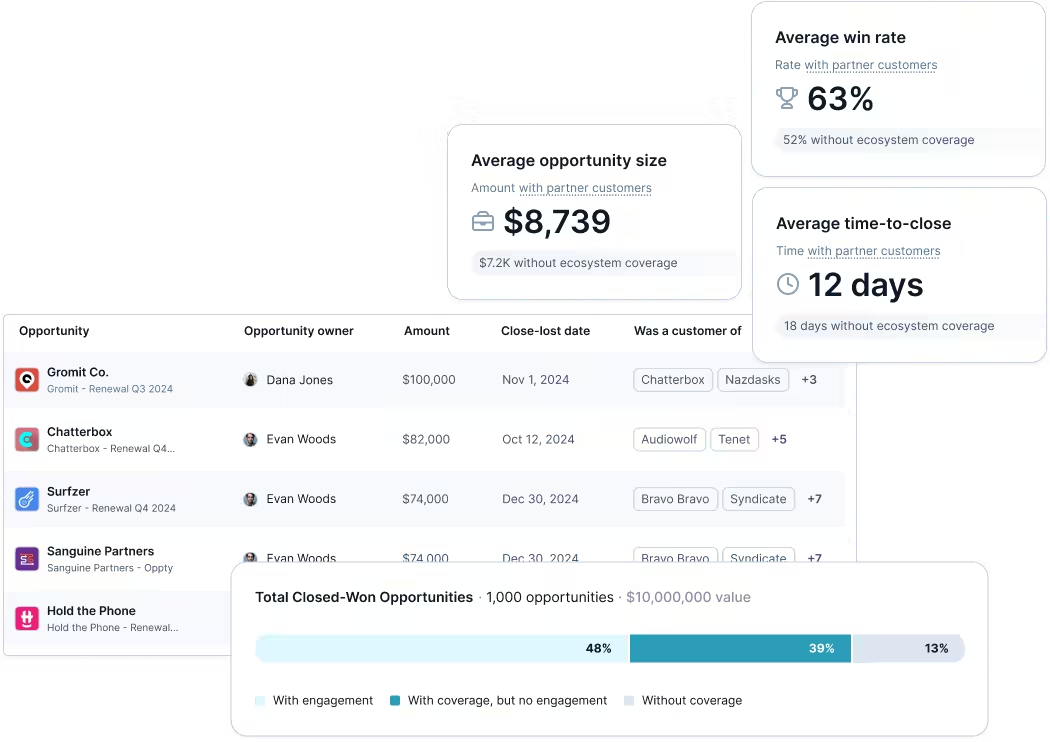
Example of Partner Impact metrics in Crossbeam.
  1. Develop and refine the integration: Extensive testing, customer feedback, and continuous iteration ensured reliability.
  2. Verify integration potential: Crossbeam was used to identify shared customers and opportunities through account mapping.
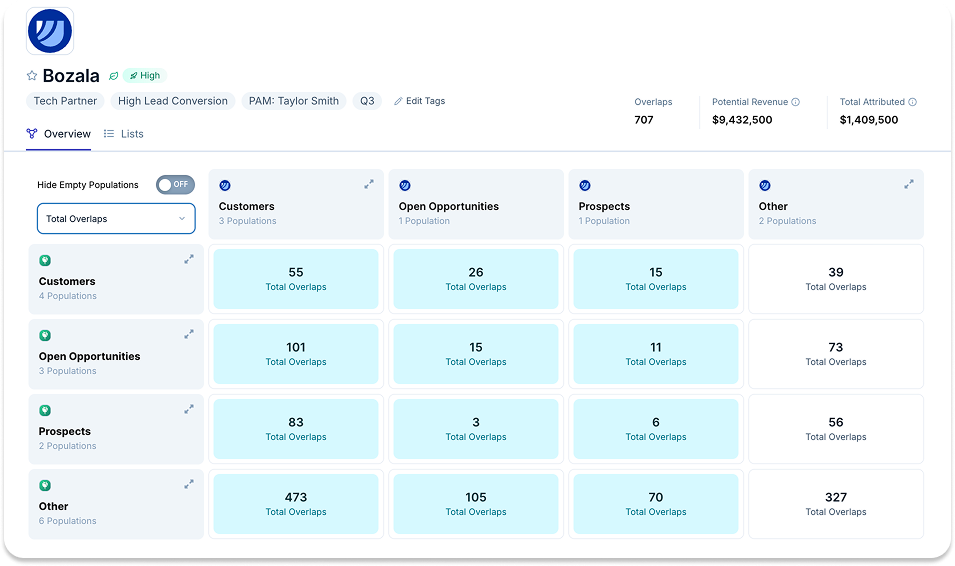
Example of the account mapping matrix in Crossbeam.
  1. Enable customers and internal teams: Joint campaigns and tailored enablement programs were built using ecosystem data. 
  2. Track success: The workforce management company tracked conversion ratios using Metabase and HubSpot. The HR systems company tracked influence, pipeline, and closed-won revenue attributed to ELG in Salesforce.  
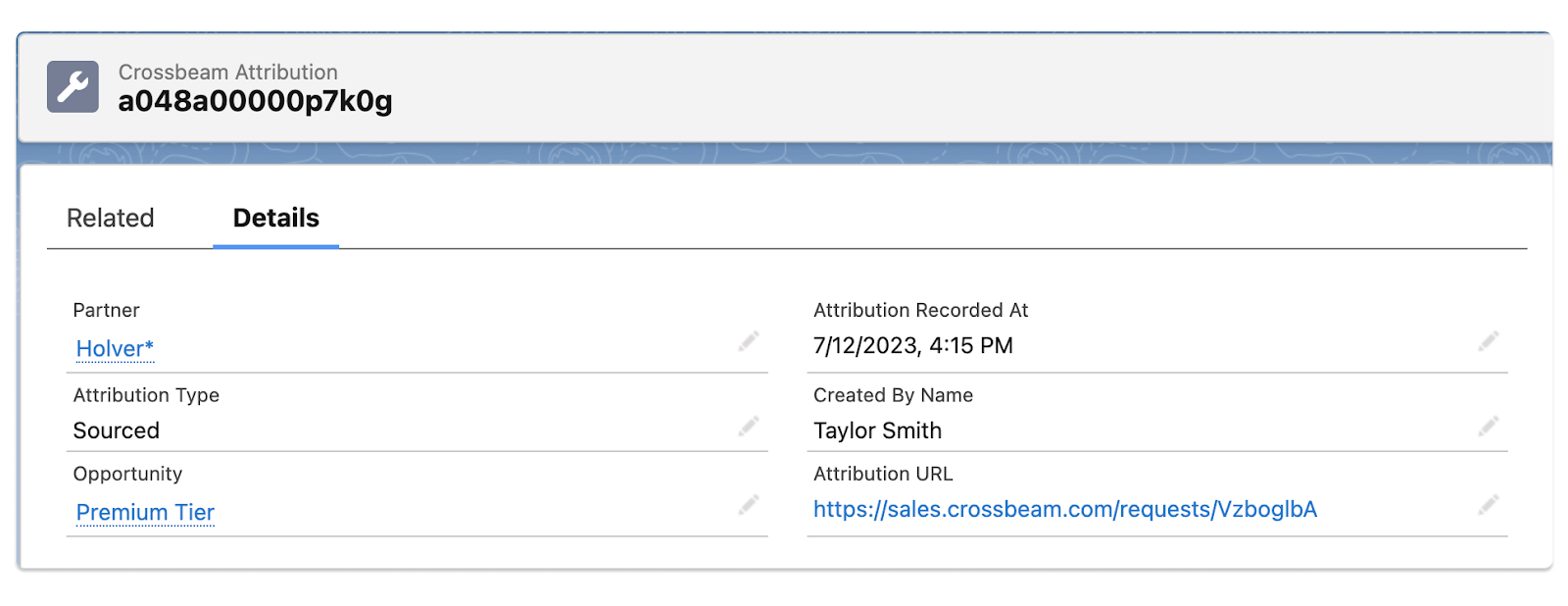
Example of partner attribution in Salesforce. 
  1. Maintain and evolve the integration: Regular updates introduced enhanced analytics, automation, and data-driven decision making. 

The integration succeeded because it was designed for existing customers first, not just net-new acquisition. 

“An integration shouldn’t be created with the sole purpose of driving net new leads, but to make an impact for your existing customers,” said the Director of International. “To scale your integration, you need an excellent collaboration, communication, alignment, and incentivisation process with your internal and external GTM teams.”

Many companies underestimate the value of existing customers. Beyond being brand advocates, they represent significant revenue opportunities that are unlocked when you consistently deliver exceptional customer experience and value. 

“When you truly help your customer, everything else is an outcome,” said the Chief Commercial Officer. “The benefits of delivering value to your customers can be seen as expansion, revenue growth, retention, etc.”

Driving joint adoption 

The teams knew adoption required more than functional integration; it required enablement of their joint customers and internal teams. 

“You need a great product, great tooling, leadership to understand the value of your ELG strategy, best of breed adoption, and really focusing on that is what can lead you to success,” said the Chief Commercial Officer. “When you have an integration, you need to be patient, involve all your teams, and invest in your joint product.”

Customer enablement

To drive adoption, both companies focused on: 

  • Strong educational and support resources
  • Joint marketing efforts such as  webinars, demo sessions, and in-person events
  • Co-branded campaigns showcasing real use cases
  • Case studies highlighting the operational impact of both technologies 

These materials didn’t focus solely on the technical aspects of the integration but also provided practical use cases that showed how the partnership could solve specific pain points, such as simplifying payroll or managing shift changes more efficiently.

They even co-hosted events and shared booths to demonstrate the benefits of the integration, and for their joint customers and potential buyers to witness how true relationships were cultivated. 

“Going to events together was a clear example of how unified our teams were and how committed we were to go-to-market together,” said the Director of International. “When you see both teams together in person, the joint value proposition becomes more than a promise, and our customers realize that wasn’t a vague API promise; they could witness how both teams were building trust and working together to deliver more value,” said the Chief Commercial Officer. 

Internal GTM teams enablement

“Growth is not a single unit responsibility; it’s a job for your entire organization,” said the Chief Commercial Officer. Because each GTM team had different goals, enablement was tailored rather than one-size-fits-all. 

It might take a bit of effort and time because no two teams can be enabled in the same way. 

To make enablement easy, the teams focused on: 

  1. Explaining the ‘why’: How the integration helped each team hit its goals, supported by ongoing enablement materials such as videos and sales collateral. This is a continuous process since the integration goes through refinements.  
  2. Using Ecosystem Intelligence: Crossbeam insights helped identify which customers would benefit most from the enablement campaigns. 

ELG plays for each internal GTM team 

Not every GTM team has the same goal; therefore, each team leverages ecosystem data differently to make the best of their integration.  

“An Ecosystem-Led Growth platform allows us to have more granular insights into the funnels and customer success perspective,” said the Chief Commercial Officer. “When you have an integration, most of the time you do it to expand your market and drive more sales, but having that mentality limits you in achieving customer success. That’s why ELG platforms are so important; they help you identify those common customers, their ecosystem data, and the best way to deliver value to them.” 

Here’s how the different teams run ELG plays and leverage ecosystem data to increase product adoption and drive more revenue:

Customer success

Ecosystem data helped CSMs proactively deliver value by: 

  • Identifying inactive integrations (early churn signals). 
  • Coordinating co-retention efforts when churn risk appeared. 
  • Detecting shifts between vendors in the same category.
  • Launching joint upsell and renewal plays.
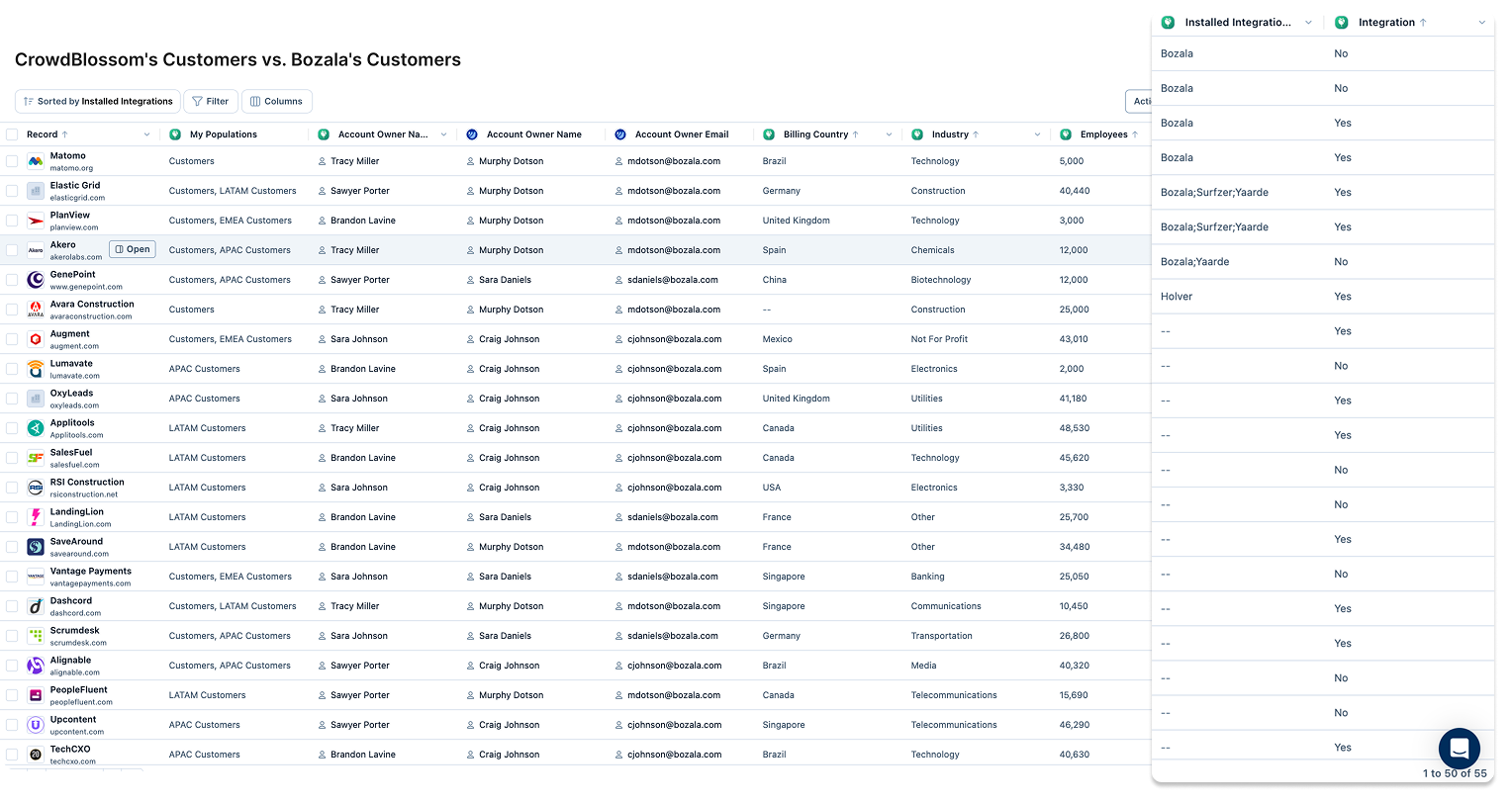
Crossbeam’s account mapping with the “installed integrations” filter.
Sales 

Once their integration was in the market, it proved valuable for both companies’ sales teams to see their common opportunities and the actionable data that their ELG motion provided them to close that deal. 

AEs can see open opportunities, pipeline, and potential customers directly in Salesforce, with additional access to Crossbeam for ecosystem insights. 
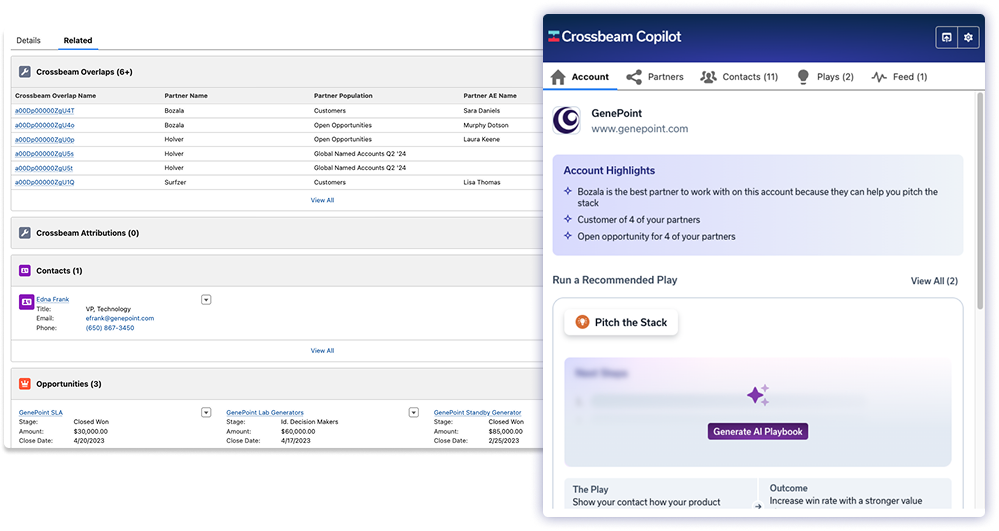
Crossbeam Salesforce Copilot. 

With support from Partner Managers, AEs could quickly tap into intel, influence, and warm introductions to accelerate stalled deals. 

Fun fact: ELG plays, Ecosystem Intelligence, and Crossbeam data helped influence 40% of the revenue generated by Europe’s leading HR systems company in the first half of 2024.

A final thought 

The Chief Commercial Officer and the Director of International shared three closing takeaways — each designed to help you adopt and champion a customer-first, ecosystem-led growth motion:

  1. Patience is strategic: ELG compounds over time; it’s not an overnight win. “Sometimes you might feel that it’s difficult to get your ELG motion started, but especially for small companies, ELG is an efficient way to scale your business,” said the Director of International. “But you really need to be patient. ELG success can’t be seen in six months and sometimes can be based on trial and error, but the results are worth trying.”
  2. ELG is accessible and value-first: Start small, leverage existing ecosystem data, and build momentum through practical actions. “Leverage Ecosystem Intelligence to identify what is already in your customers’ ecosystem,” said the Chief Commercial Officer. “Have conversations with those key players in your customers’ ecosystems, that is, budget-friendly, and will fill your GTM motion with intel, influence, and warm intros.”
  3. Alignment drives impact: Internal and external GTM teams must move in the same direction to maximize results. “To make the impact that you want, you have to align your internal and external GTM teams,” said the Chief Commercial Officer. “The best way to do so is by making sure all revenue and customer goals are at least similar, speaking your GTM language, and focusing on the value that both solutions bring.”

Ready to put this into practice?If you want to accelerate your ELG motion, strengthen customer-first alignment, and unlock ecosystem-driven revenue, book an ELG strategy call. Our team will help you apply these frameworks directly to your GTM model and identify the plays that deliver the fastest impact.

A workforce management platform set out to simplify and optimize HR and workforce operations while delivering more value to its customers. 

Its former Head of Growth, now Chief Commercial Officer, knew that achieving this meant closing product gaps. So they built an integrated product strategy. 

During the rollout, he connected with the former Head of Benelux, now Director of International, at one of Europe's leading HR systems for SMEs and scaling businesses.

After launching their technical integration and activating it with Ecosystem-Led Growth (ELG), the teams saw clear results: 

  • 35% increase in integration adoption within the first six months.
  • 20% reduction in payroll processing times due to automatic syncing of employee hours and time-off data.
  • 25% reduction in administrative errors related to HR and scheduling tasks, particularly in areas like leave management and overtime calculations.
  • 15% increase in win rates for deals where the integration was a key selling point, driven by better-targeted insights from Crossbeam.

Below is how both GTM teams paired a tech integration with ELG plays to deliver measurable customer value. 

Rolling out a successful partnership 

Most partnerships start by proving value through numbers—potential revenue, shared opportunities, customer overlap. But these teams also need to prioritize shared vision, cultural fit, and customer needs. 

Both companies recognized that their customers needed a unified solution to streamline their operations. 

“We excel in workforce scheduling and time tracking, while our partner is a leader in HR and payroll management. The collaboration was a natural fit since combining our platforms allowed us to address complementary aspects of operational efficiency,” said the Chief Commercial Officer. “We recognized that together, we could deliver even more value to our customers by integrating our solutions and creating a cohesive ecosystem that tackles HR, scheduling, and payroll challenges with ease.” 

The Director of International echoed this sentiment: “For us, even if we’re an all-in-one HR platform, we have to bridge some of our functionality, so, without adding a working scheduling and time tracking functionality, we’re not a complete platform.”

To ensure the integration delivered real value, the teams followed a structured approach: 

  1. Identify product gaps: The Chief Commercial Officer manually found and connected with a partner (Europe's leading HR systems for SMEs and scaling businesses), whose capabilities aligned with customer needs. 
  2. Align both organizations: They ensured alignment across mission, vision, corporate values, and technical compatibility, particularly around API development.
  3. Build the business case: Market feedback and trends guided prioritization, helping secure buy-in from leadership and GTM teams. 
Example of Partner Impact metrics in Crossbeam.
  1. Develop and refine the integration: Extensive testing, customer feedback, and continuous iteration ensured reliability.
  2. Verify integration potential: Crossbeam was used to identify shared customers and opportunities through account mapping.
Example of the account mapping matrix in Crossbeam.
  1. Enable customers and internal teams: Joint campaigns and tailored enablement programs were built using ecosystem data. 
  2. Track success: The workforce management company tracked conversion ratios using Metabase and HubSpot. The HR systems company tracked influence, pipeline, and closed-won revenue attributed to ELG in Salesforce.  
Example of partner attribution in Salesforce. 
  1. Maintain and evolve the integration: Regular updates introduced enhanced analytics, automation, and data-driven decision making. 

The integration succeeded because it was designed for existing customers first, not just net-new acquisition. 

“An integration shouldn’t be created with the sole purpose of driving net new leads, but to make an impact for your existing customers,” said the Director of International. “To scale your integration, you need an excellent collaboration, communication, alignment, and incentivisation process with your internal and external GTM teams.”

Many companies underestimate the value of existing customers. Beyond being brand advocates, they represent significant revenue opportunities that are unlocked when you consistently deliver exceptional customer experience and value. 

“When you truly help your customer, everything else is an outcome,” said the Chief Commercial Officer. “The benefits of delivering value to your customers can be seen as expansion, revenue growth, retention, etc.”

Driving joint adoption 

The teams knew adoption required more than functional integration; it required enablement of their joint customers and internal teams. 

“You need a great product, great tooling, leadership to understand the value of your ELG strategy, best of breed adoption, and really focusing on that is what can lead you to success,” said the Chief Commercial Officer. “When you have an integration, you need to be patient, involve all your teams, and invest in your joint product.”

Customer enablement

To drive adoption, both companies focused on: 

  • Strong educational and support resources
  • Joint marketing efforts such as  webinars, demo sessions, and in-person events
  • Co-branded campaigns showcasing real use cases
  • Case studies highlighting the operational impact of both technologies 

These materials didn’t focus solely on the technical aspects of the integration but also provided practical use cases that showed how the partnership could solve specific pain points, such as simplifying payroll or managing shift changes more efficiently.

They even co-hosted events and shared booths to demonstrate the benefits of the integration, and for their joint customers and potential buyers to witness how true relationships were cultivated. 

“Going to events together was a clear example of how unified our teams were and how committed we were to go-to-market together,” said the Director of International. “When you see both teams together in person, the joint value proposition becomes more than a promise, and our customers realize that wasn’t a vague API promise; they could witness how both teams were building trust and working together to deliver more value,” said the Chief Commercial Officer. 

Internal GTM teams enablement

“Growth is not a single unit responsibility; it’s a job for your entire organization,” said the Chief Commercial Officer. Because each GTM team had different goals, enablement was tailored rather than one-size-fits-all. 

It might take a bit of effort and time because no two teams can be enabled in the same way. 

To make enablement easy, the teams focused on: 

  1. Explaining the ‘why’: How the integration helped each team hit its goals, supported by ongoing enablement materials such as videos and sales collateral. This is a continuous process since the integration goes through refinements.  
  2. Using Ecosystem Intelligence: Crossbeam insights helped identify which customers would benefit most from the enablement campaigns. 

ELG plays for each internal GTM team 

Not every GTM team has the same goal; therefore, each team leverages ecosystem data differently to make the best of their integration.  

“An Ecosystem-Led Growth platform allows us to have more granular insights into the funnels and customer success perspective,” said the Chief Commercial Officer. “When you have an integration, most of the time you do it to expand your market and drive more sales, but having that mentality limits you in achieving customer success. That’s why ELG platforms are so important; they help you identify those common customers, their ecosystem data, and the best way to deliver value to them.” 

Here’s how the different teams run ELG plays and leverage ecosystem data to increase product adoption and drive more revenue:

Customer success

Ecosystem data helped CSMs proactively deliver value by: 

  • Identifying inactive integrations (early churn signals). 
  • Coordinating co-retention efforts when churn risk appeared. 
  • Detecting shifts between vendors in the same category.
  • Launching joint upsell and renewal plays.
Crossbeam’s account mapping with the “installed integrations” filter.
Sales 

Once their integration was in the market, it proved valuable for both companies’ sales teams to see their common opportunities and the actionable data that their ELG motion provided them to close that deal. 

AEs can see open opportunities, pipeline, and potential customers directly in Salesforce, with additional access to Crossbeam for ecosystem insights. 

Crossbeam Salesforce Copilot. 

With support from Partner Managers, AEs could quickly tap into intel, influence, and warm introductions to accelerate stalled deals. 

Fun fact: ELG plays, Ecosystem Intelligence, and Crossbeam data helped influence 40% of the revenue generated by Europe’s leading HR systems company in the first half of 2024.

A final thought 

The Chief Commercial Officer and the Director of International shared three closing takeaways — each designed to help you adopt and champion a customer-first, ecosystem-led growth motion:

  1. Patience is strategic: ELG compounds over time; it’s not an overnight win. “Sometimes you might feel that it’s difficult to get your ELG motion started, but especially for small companies, ELG is an efficient way to scale your business,” said the Director of International. “But you really need to be patient. ELG success can’t be seen in six months and sometimes can be based on trial and error, but the results are worth trying.”
  2. ELG is accessible and value-first: Start small, leverage existing ecosystem data, and build momentum through practical actions. “Leverage Ecosystem Intelligence to identify what is already in your customers’ ecosystem,” said the Chief Commercial Officer. “Have conversations with those key players in your customers’ ecosystems, that is, budget-friendly, and will fill your GTM motion with intel, influence, and warm intros.”
  3. Alignment drives impact: Internal and external GTM teams must move in the same direction to maximize results. “To make the impact that you want, you have to align your internal and external GTM teams,” said the Chief Commercial Officer. “The best way to do so is by making sure all revenue and customer goals are at least similar, speaking your GTM language, and focusing on the value that both solutions bring.”

Ready to put this into practice?If you want to accelerate your ELG motion, strengthen customer-first alignment, and unlock ecosystem-driven revenue, book an ELG strategy call. Our team will help you apply these frameworks directly to your GTM model and identify the plays that deliver the fastest impact.

Explore features built for

Account mapping UI highlighting one particular overlap count.
Account Mapping

Trade in your spreadsheets and surface the most promising opportunities in your ecosystem with Crossbeam’s pipeline matching engine.

Showing off overlaps and influence
Reports

Keep pace with your partner pipeline. Monitor trends with partners and action ecosystem opportunities with a birds eye view into your revenue engine.

slack and email icon showing off notifications
Notifications

Stay up to date on accounts and keep things moving by sending notifications where work happens. Makes moves faster with real-time notifications in Slack and Email.

Crossbeam icon showing off other integrations
Integrations

Connect your partner data anywhere. Get your ecosystem engine going with integrations that fuel your go-to-market teams and business outcomes.

Turn your ecosystem into your #1 revenue source

Instantly capture insights from your ecosystem in less than a minute.