How Aikido Security Built a No B.S. Partner Engine That Turns Data Into Revenue
- Partner qualification using account overlap data
- Data-backed decisions on tech integrations
- Scaling channel revenue after first deal
- Channel conflict detection and prevention
- Measuring partner-driven pipeline and revenue
- Automated partner enablement and support



Note: The data and images shared throughout this article are from sources such as Crossbeam and ELG Insider. They do not, in any way, reflect Aikido’s performance.
When Johan De Keulenaer joined Aikido Security (a Belgian cybersecurity startup which just hit unicorn status with a new funding round) more than two years ago, the company was a young scale-up with global ambitions and a growing list of partners.
He wasn’t new to the team; he’d served as an advisor before being invited by the CEO to take on a bigger challenge: build the partnerships function from the ground up.
Today, Johan is the Head of Aikido’s partnerships and channel strategy across regions. His mission? To make partnerships measurable, scalable, and unflinchingly pragmatic.
“I’ve always believed that partnerships aren’t about hope or hype, they’re about evidence,” Johan said. “If there’s overlap and value, we move. If there’s not, we don’t. It’s that simple.”
Keep reading to learn how Johan built a partner motion based on valuable overlaps to drive multiple deals closed within 30 days of partner onboarding.
The challenge: Too many partners, too little proof
By the time Johan officially joined Aikido, the company had built early traction and plenty of inbound interest.
Tech vendors wanted to integrate. Channel partners wanted to resell. Everyone wanted a piece of Aikido’s fast-growing brand.
But behind the excitement was misalignment. The team was juggling tech alliance resellers, and service providers — all without a clear view of where the real revenue potential lived.
“It wasn’t about finding partners,” Johan said. “It was about knowing which ones mattered and about where our efforts would pay off.. We were spending time everywhere and getting results nowhere.”
Without overlap account data, every opportunity relied on gut feeling. Integrations envisioned without proof of customer demand. Channel partners were onboarded without data-backed validation of their book of business.
The result? Time wasted, energy scattered, and no way to measure which partnerships were actually moving the pipeline.
That’s when Aikido turned to Crossbeam.
“Crossbeam became our foundation for focus, a shared data layer that replaced assumptions with facts,” said Johan.
The breakthrough: Building from data
Johan restructured the entire partner motion around one core principle: Data mapping before deals. Proof before partnership.
Aikido now runs two synchronized partnership motions, each powered by Crossbeam:
1. Tech alliances: Integrate where overlap proves value
Before investing engineering hours into any new integration, Johan’s team maps accounts in Crossbeam to see if there’s real overlap and a clear joint value story.
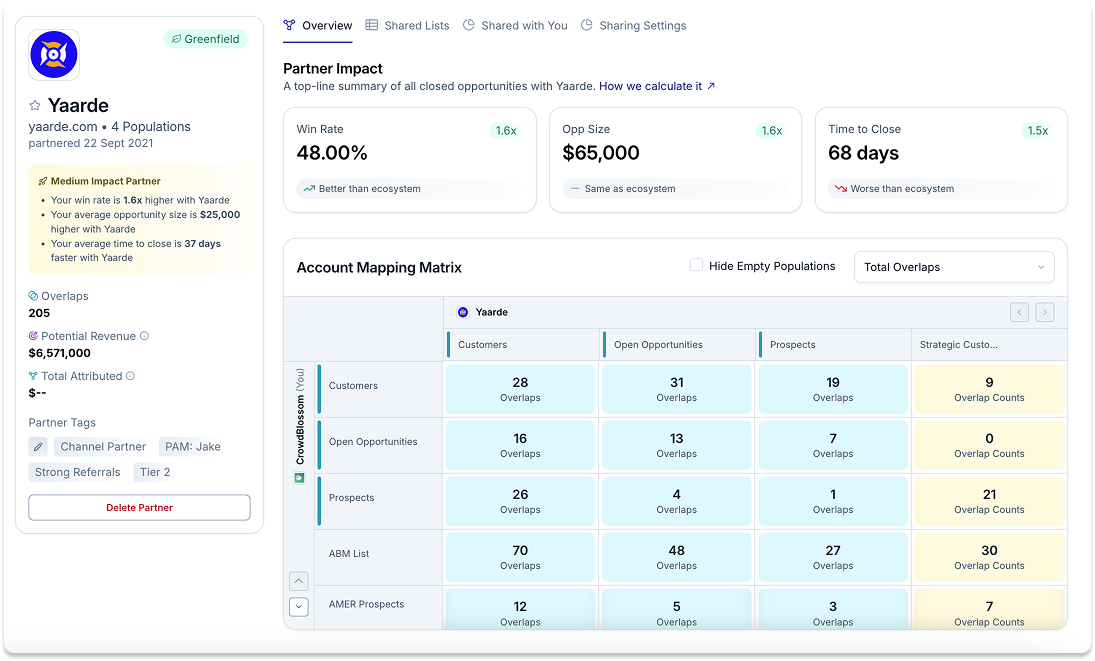
If data shows mutual customers, complementary use cases, and a believable revenue upside, Aikido moves fast. If not, they walk away.
That discipline gave birth to one of Aikido’s most successful integrations: Aikido × Vanta.
“We saw clear overlap with Vanta and a perfect joint story,” Johan explains. “Vanta makes companies compliant; we make them secure. Together, we make security tangible.”
Today, dozens of shared customers use both platforms, and the teams even launched a mutual referral program so commercial reps can cross-promote each other’s products.
“It’s the kind of partnership that just makes sense,” Johan adds. “It saves customers hours of manual work and creates real value on both sides.”
2. Channel partnerships: Bring a deal or don’t partner
Aikido’s channel motion runs on what Johan calls a “no-bullshit strategy.” Every potential partner must bring a live deal to the table, no exceptions.
“We get two to three new partner requests per day,” Johan said. “Some just want our logo on their website. So our rule is simple: bring a deal, or we don’t talk.”
Once that first deal lands, the partnership team immediately runs an account mapping session in Crossbeam to uncover new opportunities and scale potential. That process led to one of Aikido’s biggest success stories with one of our leading UK resellers. with their UK reseller, Sapio.
“After the first deal, we mapped accounts and found 180 mutual prospects,” Johan said. “From one deal, we jumped to five. That’s when mapping turns into a transaction engine, and the transaction engine turns into a relationship.”
Turning partner data into a scalable GTM system
Aikido didn’t stop at data-driven qualification. They operationalized the entire motion to make collaboration repeatable and measurable.
Here’s how they did it:
Step #1: Connect, account map, and qualify
Every new partner conversation starts with a mapping session. If the partner uses Crossbeam, both sides connect directly. If not, they share an offline list that Aikido maps manually.
“We look at data before we engage in a collaboration,” Johan said. “It’s how we make sure integrations and partnerships both create revenue.”

Step #2: Co-sell where sellers already work
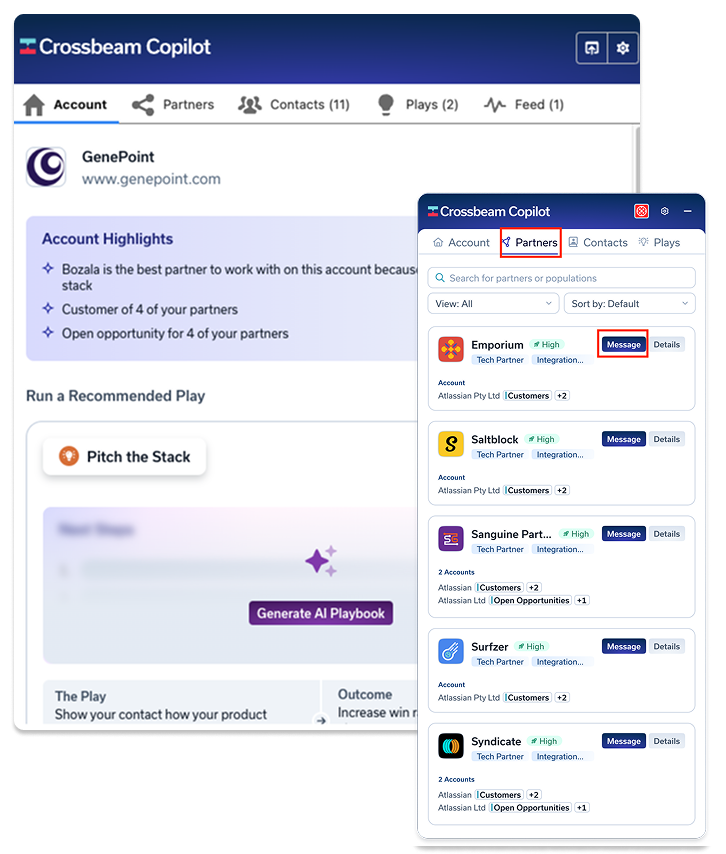
All Crossbeam insights live inside HubSpot, Aikido’s CRM of record. Crossbeam Copilot gives sellers a live view of shared customers, warm contacts, and key partner insights, directly in their workflow.
“Copilot is our co-pilot in the co-sell,” Johan said. “It tells our AEs who to speak to, who knows who, and where the next opportunity might be hiding.”
Step #3: Always keep communication “on”
Aikido’s commercial and partner teams collaborate daily via Slack and Microsoft Teams and nextgen Introw PRM. Weekly partner reviews unblock stalled deals; monthly mapping sessions surface new opportunities.
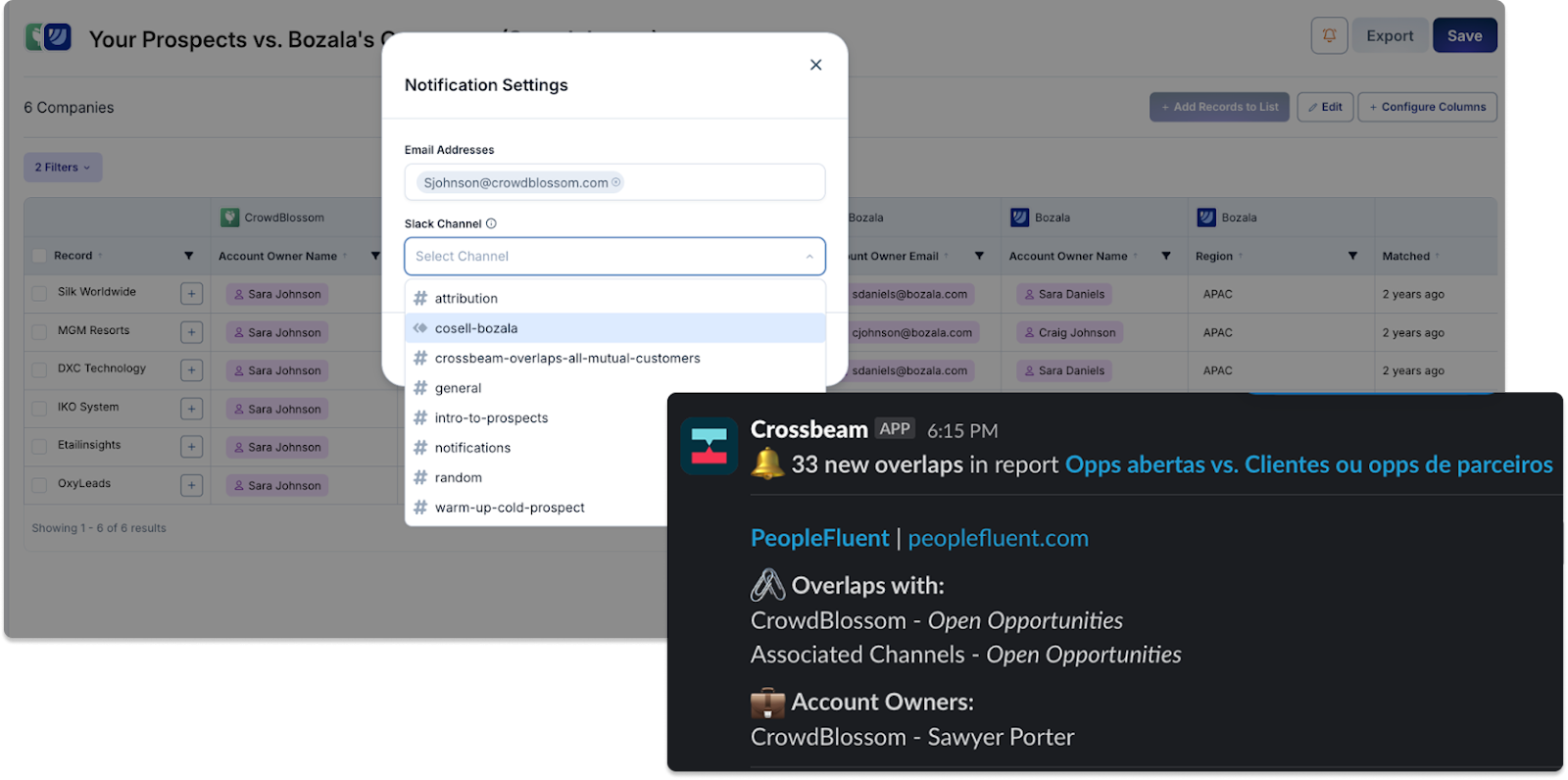
They also use Crossbeam’s Slack integration so sellers can run real-time lookups, checking if a prospect is already in a partner’s ecosystem.
“The moment a partner’s prospect becomes a customer, the whole team sees it in Slack,” Johan said. “It’s instant visibility and instant motivation.”
Step #4: Automate the rest
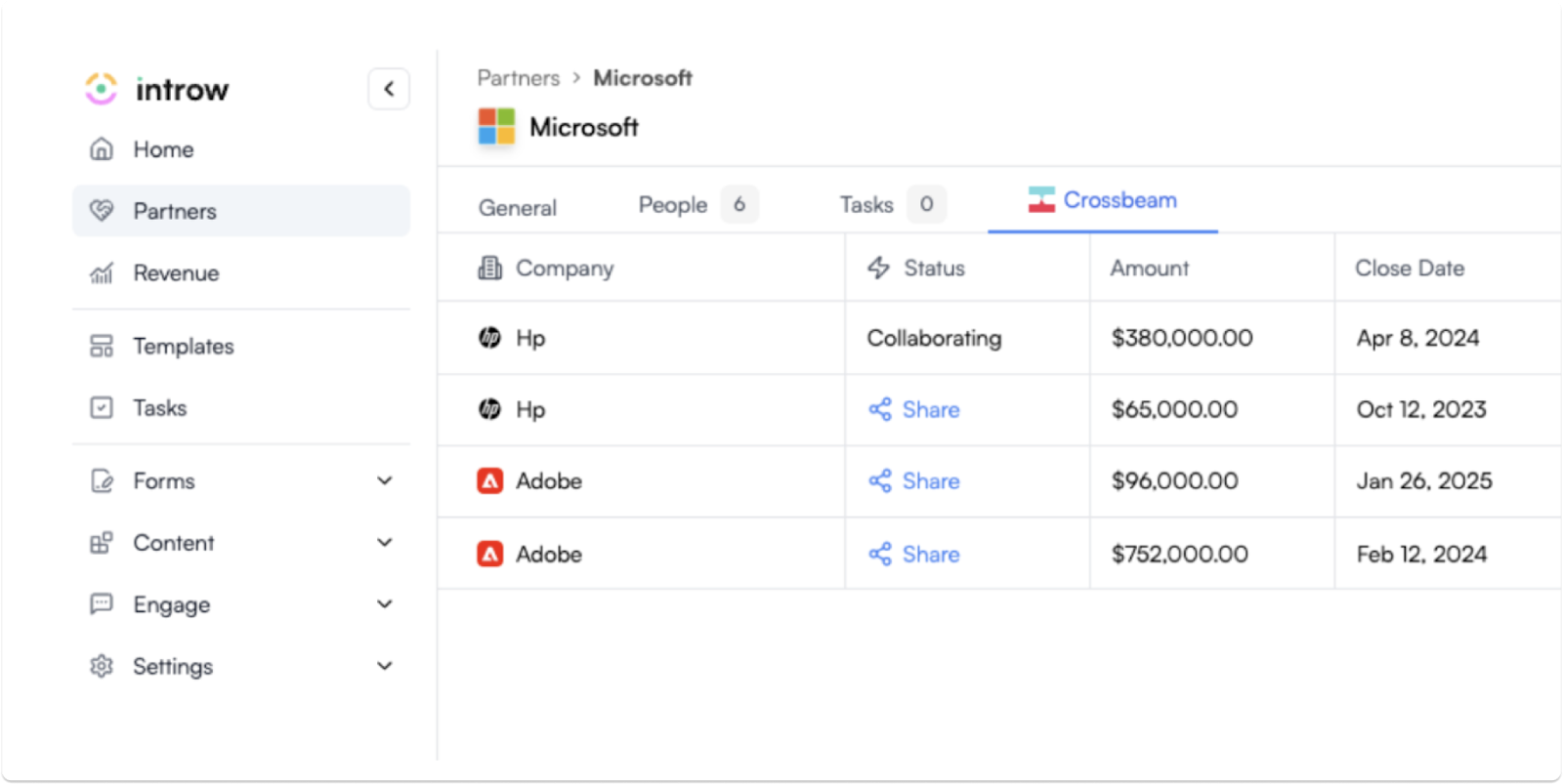
Thanks to Crossbeam’s integration with Introw, Aikido’s partner management system, AI flags channel conflicts as soon as opportunities are submitted. The same system hosts an AI-powered partner chatbot that answers product and marketing questions 24/7, even on weekends.
“It’s simple,” Johan said. “If you can automate something, do it. We’d rather spend time building relationships than answering the same question twice.”
Step #5: Measure everything
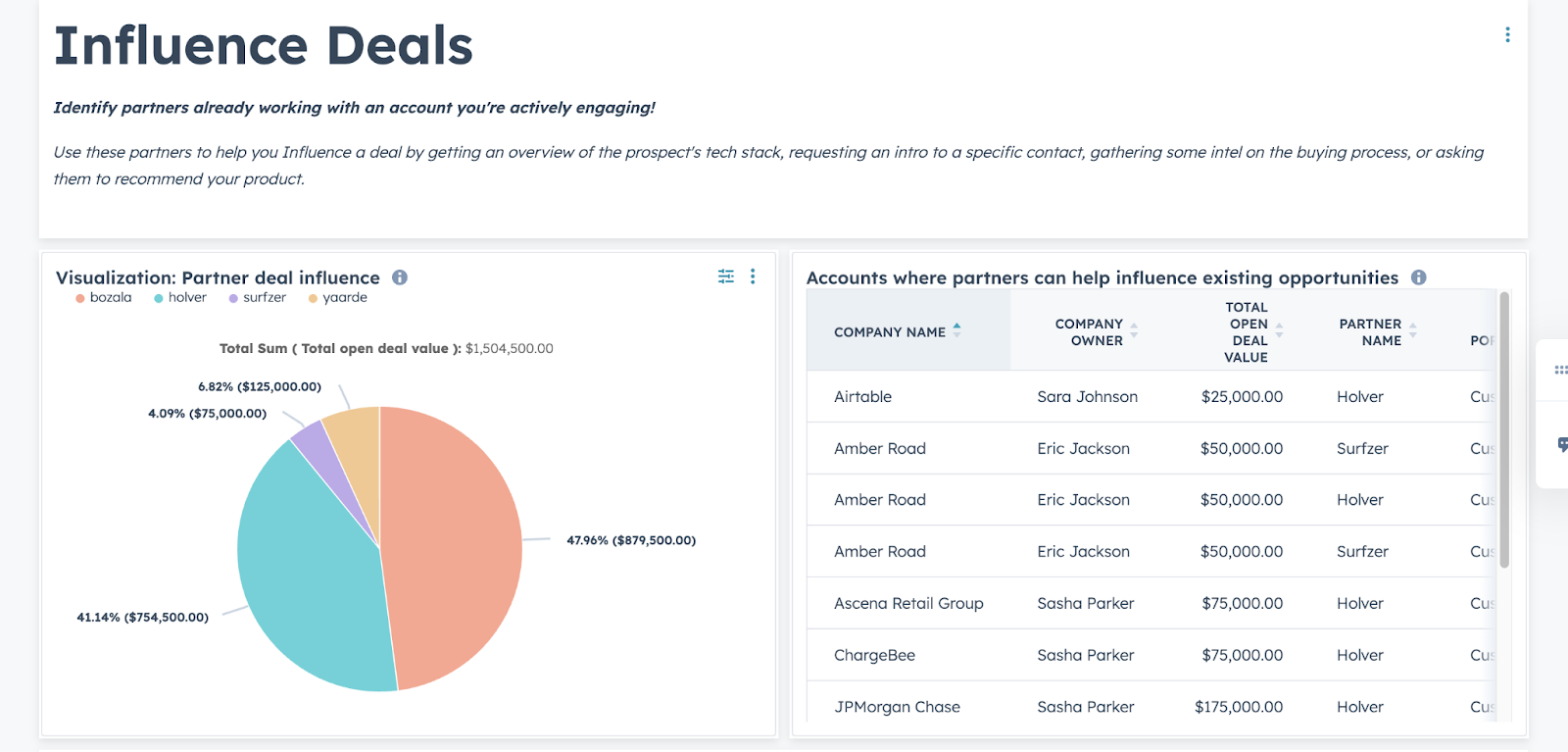
Every motion rolls up into HubSpot dashboards, built by Aikido’s internal RevOps team. The dashboards track:
- Direct vs. channel pipeline
- Partner tier performance (strategic, growth, emerging)
- Regional pipeline (US vs. LATAM vs. EU)
- Revenue impact by partner and Qualified pipe per partner manager
“We’re super data-driven,” Johan said. “If it doesn’t deliver, we kill it. Simplicity wins.”
The results: From guesswork to growth
What started as an effort to create focus has evolved into a repeatable growth engine.
After adopting Crossbeam, there was far less guesswork, and Aikido’s partner program gained clarity and accountability, making it clear which partners brought real value and could walk the talk and actually deliver on their promises.
In the channel motion, partners are turning account mapping into exponential growth: one co-sell deal snowballed into five within a single quarter.
In the tech alliance motion, the Vanta integration went from a proof-of-concept to many shared customers who now use both tools in sync.
And across both motions, the impact is clear:
- Faster time-to-revenue wins within 30 days of mapping
- More seller engagement reps see ecosystem data where they work
- Higher partner trust because shared wins build shared motivation
- A reduction in time spent identifying mutual opportunities from hours to minutes
- At least 70% mapped partners in a strategic segment produced actionable overlaps, allowing their team to focus on partnerships that actually drive results
- Driving a 35% increase in meetings booked through partner warm introductions
“Nothing builds trust like a shared win,” Johan said. “Crossbeam helped us get there faster, turning partnerships into action, and action into revenue.”
Perhaps most importantly, the company’s culture around partnerships has shifted. Partnerships are no longer “nice to have.” They’re a force multiplier at Aikido.
“We used to partner without visibility,” Johan said. “Now, we partner for the pipeline. That’s the difference.”
Lessons from a no B.S. partner strategy
After two years of scaling partnerships at Aikido, Johan’s advice to other leaders is refreshingly clear:
- Decide with data: Don’t build integrations or partner motions on hope, build them on proof.
- Move fast from proof to scale: Your first deal should land in 30 days. The second and third are within 90.
- Automate what slows you down: Every minute you save on admin is a minute you can spend co-selling.
- Kill what doesn’t deliver: Complexity kills speed. If it’s not a moving pipeline, cut it.
- Partner for the pipeline, not the press release: Real partnerships are measured in revenue, not retweets.
“Crossbeam helped us turn partnerships from an art into a science,” Johan said. “We know who to play with, where to play, and how to win together.”
Ready to turn your partnerships into a pipeline engine? See how account mapping and overlap data can transform your ecosystem motion. Book an ELG strategy call with our team.
Explore features built for

Trade in your spreadsheets and surface the most promising opportunities in your ecosystem with Crossbeam’s pipeline matching engine.

Keep pace with your partner pipeline. Monitor trends with partners and action ecosystem opportunities with a birds eye view into your revenue engine.

Stay up to date on accounts and keep things moving by sending notifications where work happens. Makes moves faster with real-time notifications in Slack and Email.

Connect your partner data anywhere. Get your ecosystem engine going with integrations that fuel your go-to-market teams and business outcomes.